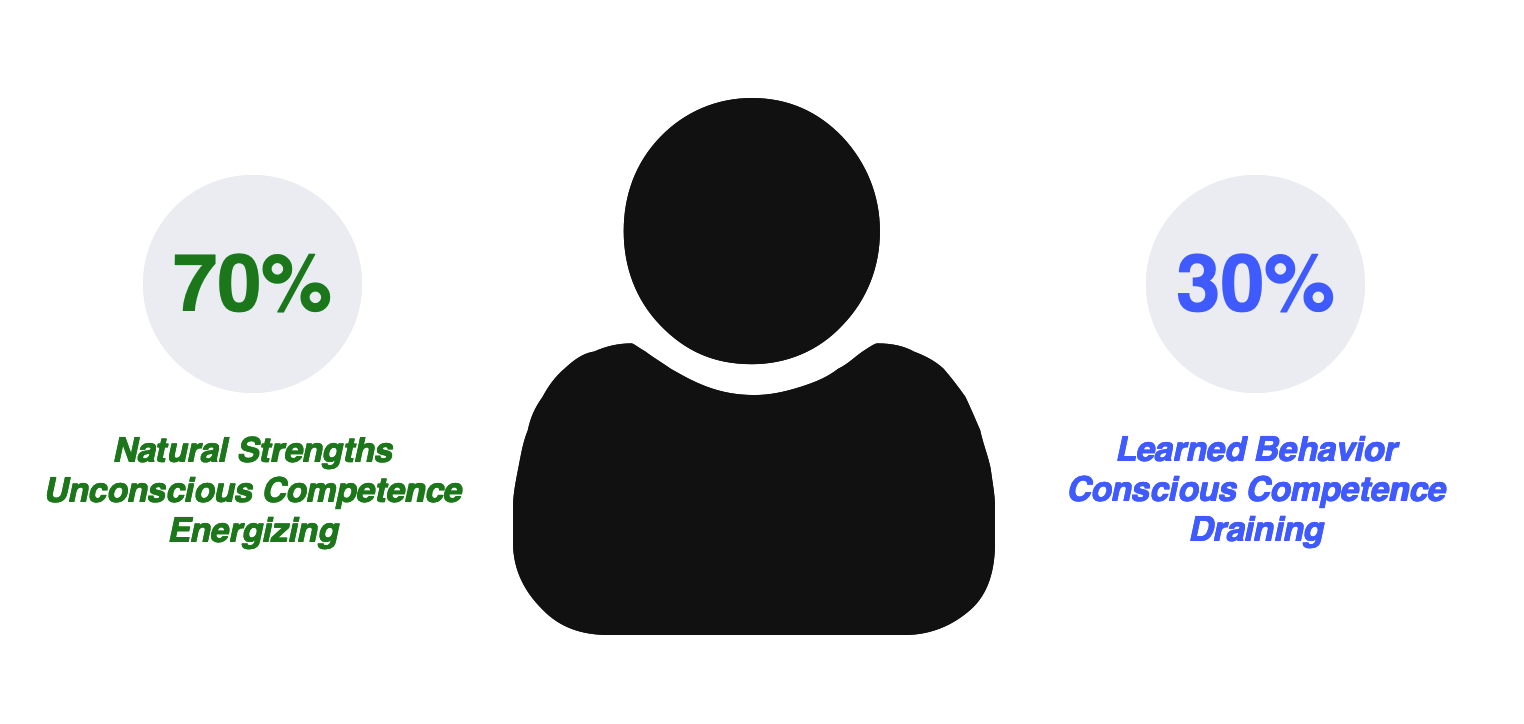
What work is easy for you and energizes you? What drains you?
A private investment firm has grown from $2 billion to $15 billion in five years. There’s an appetite to keep growing and bring in new investors. But the business has outrun its infrastructure.
One executive is considering whether to volunteer for the COO role. He has the capacity, integrity, and energy to do it well. Here’s the rub: when you’re capable and committed to the business, an important need can feel like an invitation to take responsibility. It deserves a closer look before you say yes.
Criteria for Deciding
The question before us is whether taking that role would be the best and highest stewardship of who he is.
His leadership voice is Pioneer-Guardian. In GiANT’s 5 Voices framework, the Pioneer brings strategic vision and a drive for results. The Guardian brings attention to resources, sound decisions, and effective systems. I can see why building the infrastructure for the next stage of growth might appeal to that combination, but we still need to understand what the COO role would require of him over time.
His Thinking Wavelength
Paterson’s Thinking Wavelength helps us consider where someone naturally works along a continuum from administrative and operational thinking to strategic and developmental thinking. We’ll compare his thinking style with the actual work of this particular COO role:
How much involves designing the operating model for a much larger business?
How much involves coordinating daily execution, resolving recurring problems, and ensuring consistent follow-through?
The title alone won’t tell us. We need to understand the mandate and how the work will change once the initial infrastructure is built.
His 70-30
GiANT’s 70–30 tool encourages executives to spend roughly 70 percent of their time in work that comes naturally and gives them energy, preserving capacity for the necessary work that requires more learned effort.
That gives us another way to examine the work of the role:
What recurring activities constitute a typical week?
Which responsibilities would draw on his natural strengths?
Which could he perform well but find consistently draining?
His high capacity makes that distinction especially important. He could sustain work through effort for a while (perhaps several months). But at what cost to his mental and emotional stamina? To interactions with colleagues? We want to understand whether the COO role is where his strongest contribution belongs.
The Opportunity Cost
Taking the COO role would change his availability for growing the business and bringing in investors. What would the firm gain, and what contribution would it give up? He could do the COO role, but he seems better placed to help define the role and bring in someone whose strongest contribution would be to lead it.
That decision will become clearer as we understand both the business’s needs and my client’s particular strengths, priorities, and commitments.
If you’re considering a role because you can see that the work needs doing, why not step back before you say yes? Get clear about what the organization needs—and where you can make your best contribution.
Better yet, reach out and let’s talk through it together.